Oil and Gas Watch.
We monitor oil and gas leasing across the Rocky Mountain West
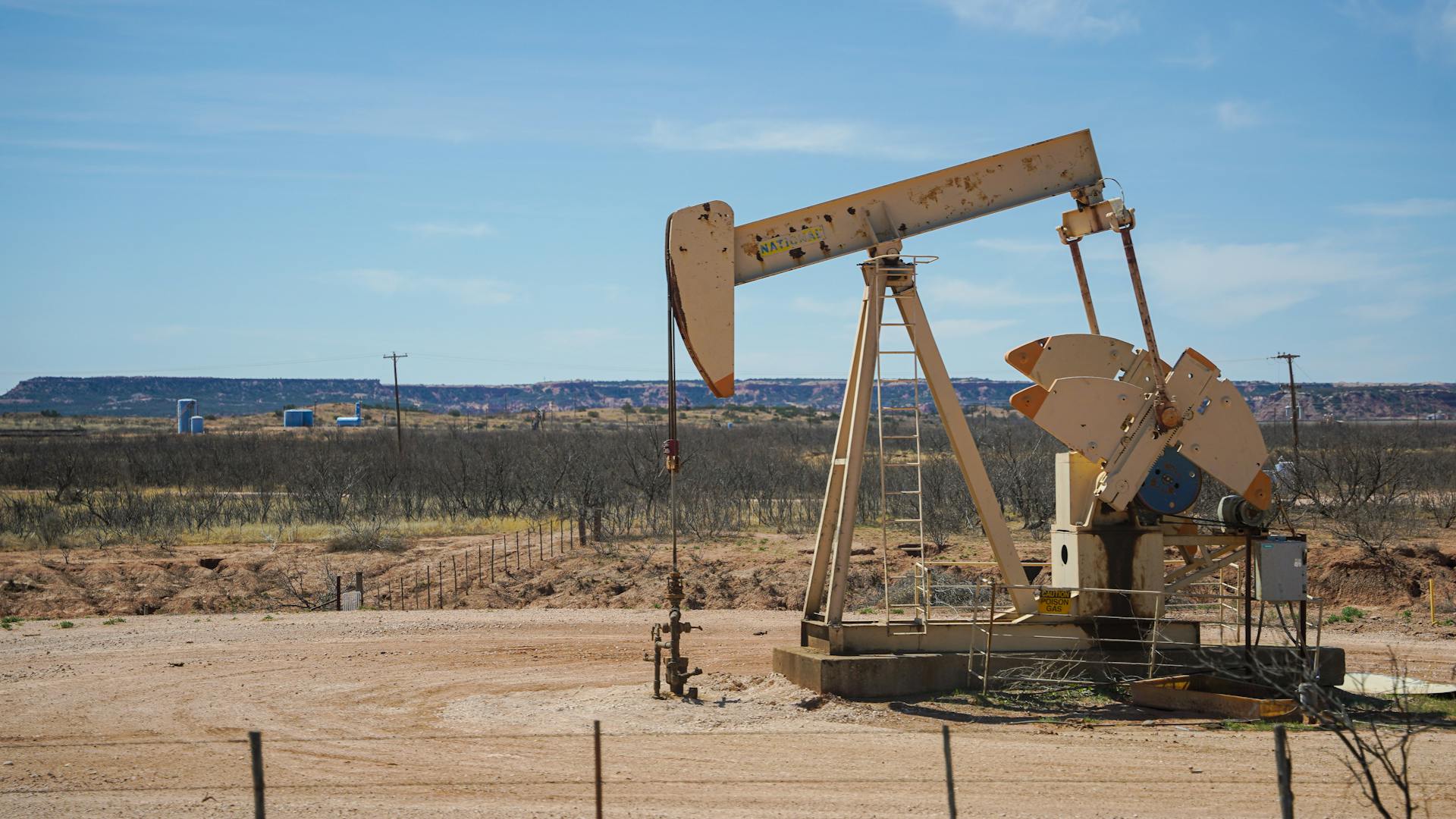
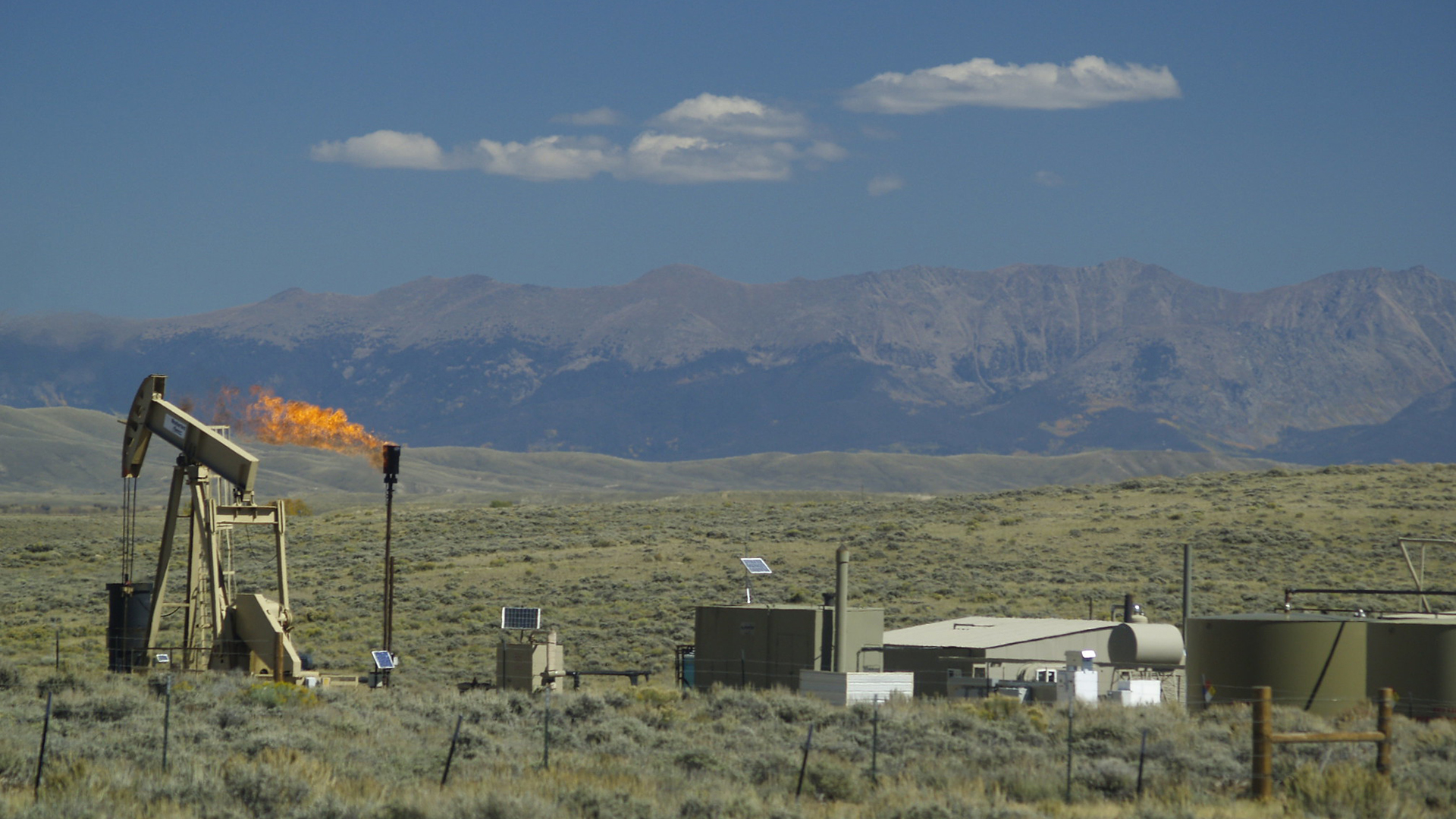
Oil and gas development compromises our public lands and waters, changes and fragments wildlife habitats, threatens irreplaceable cultural resources and sacred sites, and risks our health and outdoor legacy. We work to stop leasing that would harm wildlife and wild lands.
Donate Today
Take Direct Action
We monitor oil and gas leasing cross the Rocky Mountain West:
The federal government owns rights to about 700 million acres of onshore mineral resources, including oil and natural gas in the United States. That is about 30% of the lands in the United States. As of the end of September 2024, over 22 million acres of these lands were leased to corporations and individuals for oil and gas development. Wyoming, New Mexico, Utah, Colorado, Montana, and Nevada have the largest amount of land leased in the Continental United States.
Rocky Mountain Wild works with a coalition of organizations across the Rocky Mountain West that monitors oil and gas leasing in those states. Oil and gas development compromises our public lands and waters, changes and fragments wildlife habitats, threatens irreplaceable cultural resources and sacred sites, and risks our health and outdoor legacy. We work to stop leasing that would harm wildlife and wild lands. We have been directly involved in the deferral of over 3 million acres of public land from oil and gas development.
Current Threats:
On July 4, 2025, the Federal Budget Reconciliation Bill (the “One Big Beautiful Bill Act” or OBBA) was signed into law. Among many other things, this law undid reforms to federal oil and gas leasing and development that Rocky Mountain Wild fought hard for. This new law gives oil companies free rein to lease over 200 million acres of national public lands anytime they want. It also eliminates the Bureau of Land Management’s authority to ensure extraction doesn’t hurt wildlife, clean water, recreation, and areas of historic and cultural importance. Learn more about the impact of the OBBA here.
Despite these setbacks, Rocky Mountain Wild continues to work with our coalition partners to fight for biodiversity and push back against policies that favor big business over the needs of humans, wildlife, and our planet. You can help! Our federal agencies need to hear that people care about conservation.
Rocky Mountain Wild’s Oil and Gas Toolbox for Activists gives you the information you need to make your voice heard defending wildlife and wild lands from inappropriate oil and gas development. Our Current Oil and Gas Comment Periods page gives you the information you need to engage on upcoming Federal oil and gas lease sales.
Programs within the Oil and Gas Watch project:

Check out the Open for Drilling: The Outsized Influence of Oil & Gas on Public Land report:
The Bureau of Land Management is the nation’s largest land management agency and manages 10% of the United States’ landmass and 30% of the nation’s subsurface minerals. Despite these lands being required by law to be managed for multiple uses—including conservation and recreation—the oil and gas industry continues to be the favored tenant over all other users, and public lands remain a significant source of U.S. greenhouse gas emissions.
This report from The Wilderness Society, presenting research done by Rocky Mountain Wild, finds that as of January 2025, more than 81% of all Bureau of Land Management lands (over 200 million acres!) in the Western United States remain open to oil and gas leasing. This means only 19% of BLM lands are off limits to oil and gas development.
Federal Oil and Gas Leasing Nominations:
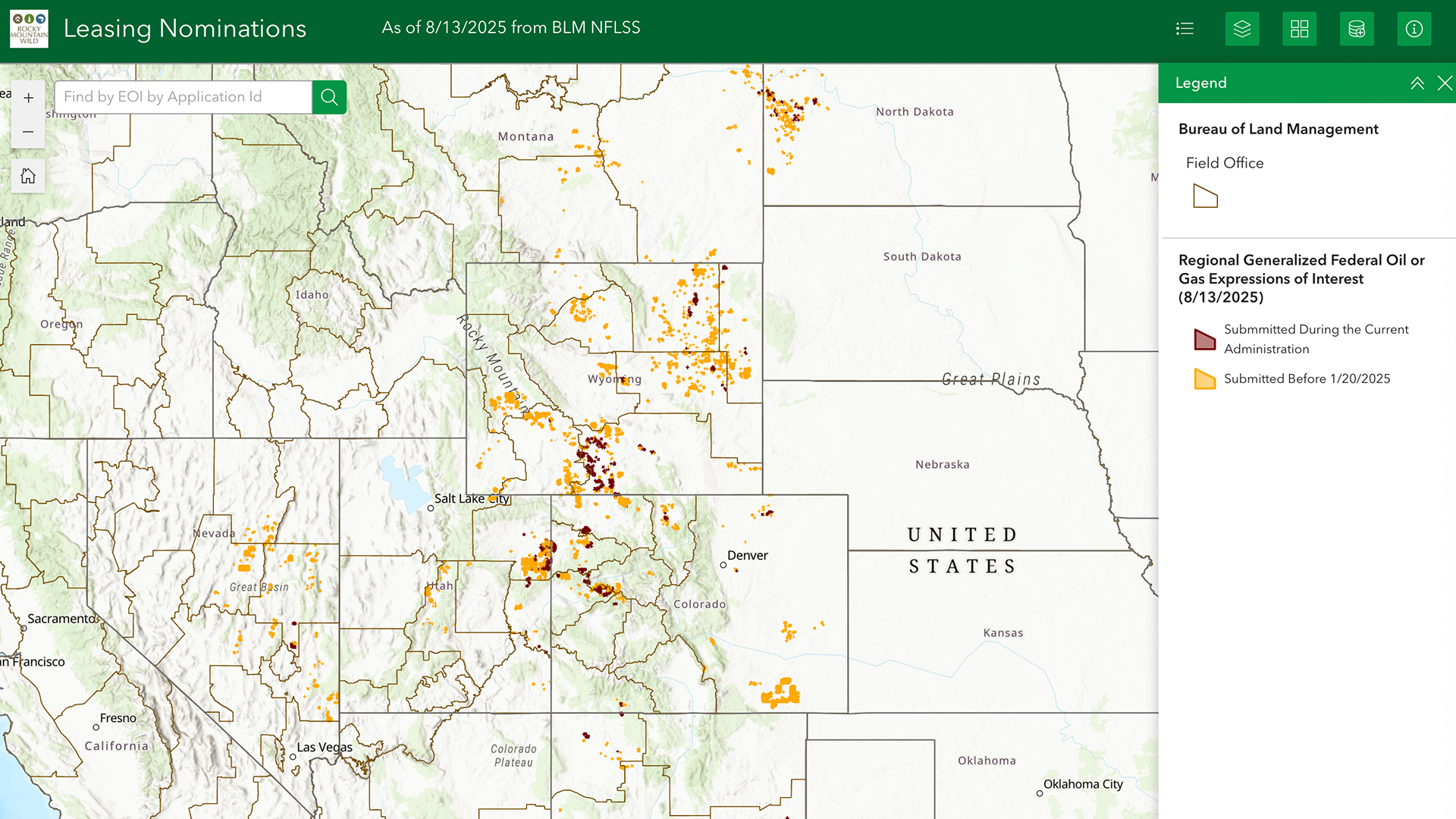
Under current federal law, if an oil and gas developer nominates federal land for leasing and that land is available, it must be offered for lease within 18-months. Rocky Mountain Wild regularly reviews industry requests, also known as Expressions of Interest (EOIs) and maps their general location. Visit our interactive map to see what lands are under threat.