
Oil and Gas Toolbox for Activists.
We have some resources to help you write your comments and protests
This toolbox includes information about how the process works, how to write comments and protests, a virtual recording from an Oil and Gas Lease Sale Comment Writing Workshop, and additional resources.
Donate Today
Take Direct Action
Why submit your comments and protests:
Every year, millions of acres of our public lands are offered up to oil and gas companies for exploration and development. In 2017 an area twice the size of the State of Vermont was put on the auction block – giving big corporations the opportunity to lock up these lands for their private gains, and denying us the ability to protect them for wildlife habitat, recreation, and other non-consumptive uses.
You can help make sure that our federal agencies manage these areas in ways that benefit all of us. Here is your toolbox for commenting on and engaging in this process.
How the process works:
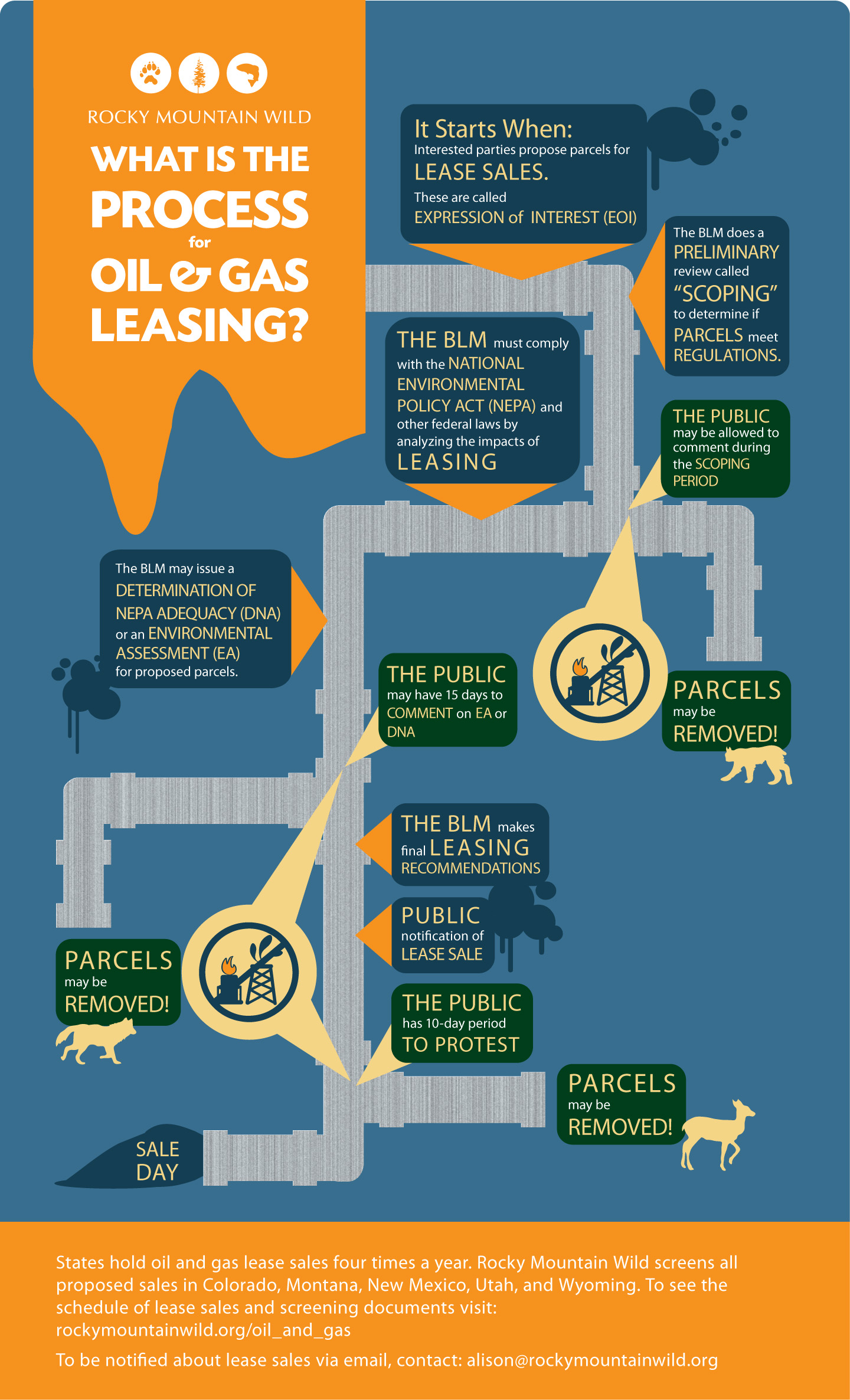
Four times a year the Bureau of Land Management (BLM) offers up parcels of public land to be leased for oil and gas exploration and development. It is a complex process with multiple steps. The public has opportunities to engage at different steps along the way. Below are a fact sheet and infographic that explain that process, as well as a glossary of terms to help you understand the lingo, and a template for technical scoping comments.
Writing Comments & Protests:
Your written comments and protests to the BLM can make a difference and get parcels pulled from a lease sale, but you have to do it right. Check out our Writing Comments that Stick checklist and our How to Navigate Oil and Gas Resources and Make a Comment tutorial for tips and processes. Want a deeper dive? Check out the video about writing Oil and Gas Lease Sale Comments we produced in conjunction with Wild Montana.
Virtual Event Recording: Oil and Gas Lease Sale Comment Writing Workshop
Writing Resources:
- Writing Comments That Stick (PDF)
- Cómo Escribir Comentarios Que Dan En El Blanco (PDF)
- Guide to Writing Comments About the Impacts on Wildlife and Plant Species (beta draft) (Google Docs)
- BLM Lease Sale Scoping Template for Technical Comments. Language highlighted in yellow needs to be filled in with information relevant to the particular lease sale. References highlighted in green are sources that we recommend including as exhibits to be submitted as PDFs accompanying the comment letter. Look for updates as the NEPA process for lease sales is clarified.
Rocky Mountain Wild’s Assessment of Biological Impact (ABI Screen):
Rocky Mountain Wild’s Assessment of Biological Impact (ABI) is a groundbreaking GIS tool that marries our GIS data to a relational database containing information about species status and special areas for the purpose of screening proposed developmental projects and land use plans. The purpose of the tool is for community members and organizational partners to identify and address potential conflicts early in the planning process. The tool can also be used to identify supplemental values in areas that are proposed to be protected.
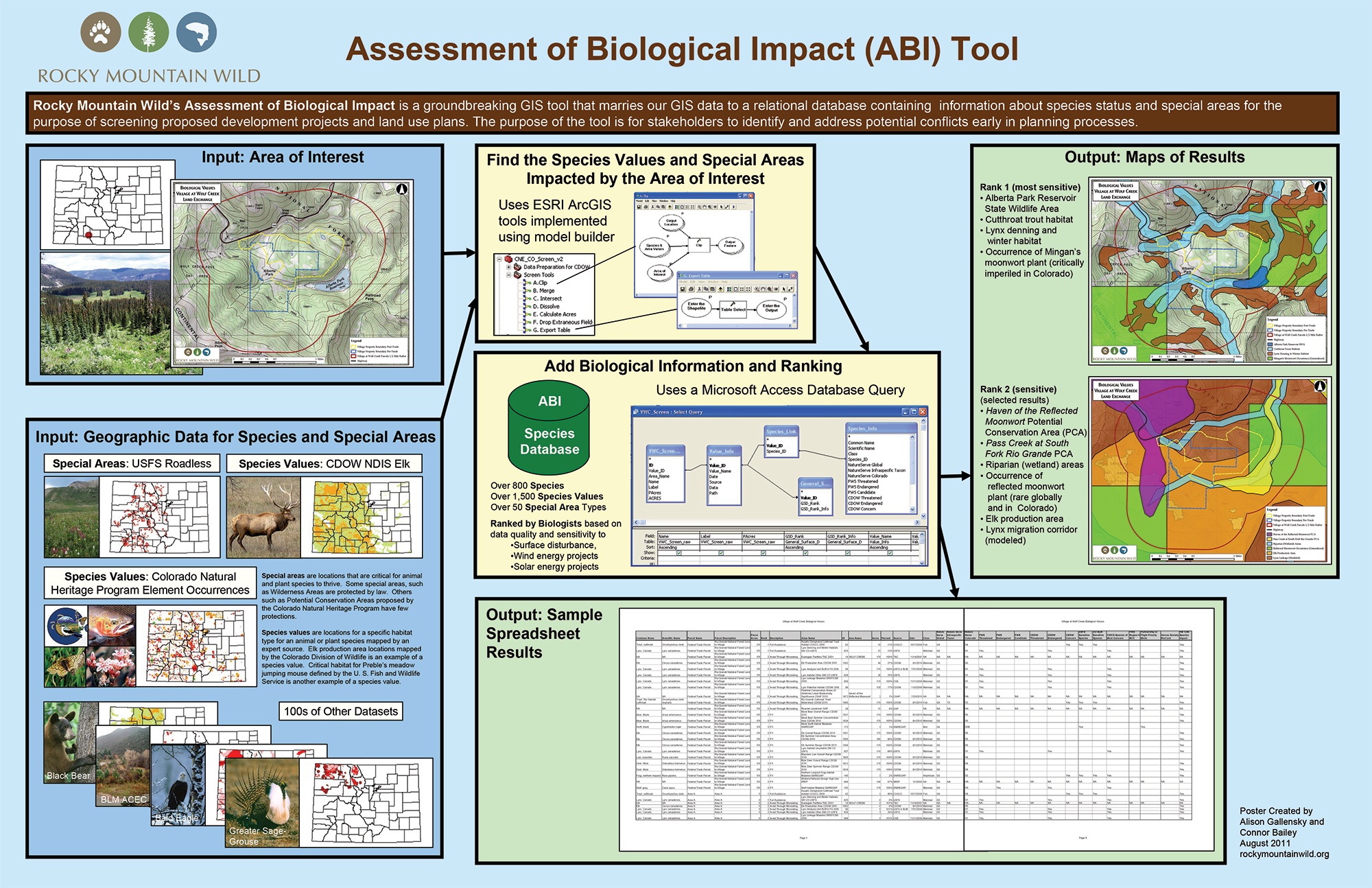
Download a copy of this poster.
Interested to learn more about the ABI Screen? Check out these white papers.
Additional Resources to understand the results from the ABI Screen:
- The NatureServe Conservation Status Definitions webpage explains how to decode the NatureServe Global, Infraspecific Taxon and Colorado status codes in the reports.
- The Colorado Parks and Wildlife Threatened and Endangered List webpage shows how Colorado Parks and Wildlife classifies species. Note that the wildlife portion of Colorado Parks and Wildlife (CPW) was formerly named the Colorado Division of Wildlife (CDOW)
- The Bureau of Lands Management (BLM) State Threatened & Endangered Information webpage has information about BLM Sensitive species.
- The Colorado Parks and Wildlife State Wildlife Action Plan webpage has information about Comprehensive Wildlife Conservation Strategy (CWCS) Species of Most Concern.
- The Rocky Mountain Bird Observatory Colorado Partners in Flight webpage has information about Partnership in Flight Priority Birds.
These pages have been deleted by the current administration, but we hope they come back:
- The U. S. Fish & Wildlife Service (FWS) Endangered Species Program webpage has more information about federally Threatened and Endangered Species.
- The USDA Forest Service (USFS) Threatened, Endangered, and Sensitive Species webpage has information about USFS Sensitive species.
- The United States Fish & Wildlife Service (FWS) Mountain Prairie Region (Region 6) Migratory Birds webpage has information about Birds of Conservation Concern (BCC).
Our latest oil and gas monitoring projects
